OpenAI vs Stability AI vs Replicate: Best AI Image Generator for Marketing in 2026
We've shipped marketing imagery for dozens of client launches in the last twelve months — and most of those images now start in an AI generator. To pick a default for our internal stack we ran the same prompts through OpenAI gpt-image-1, Stability SD3, and a few of the top Replicate-hosted models. This is what we found, what surprised us, and which provider we recommend for which job.
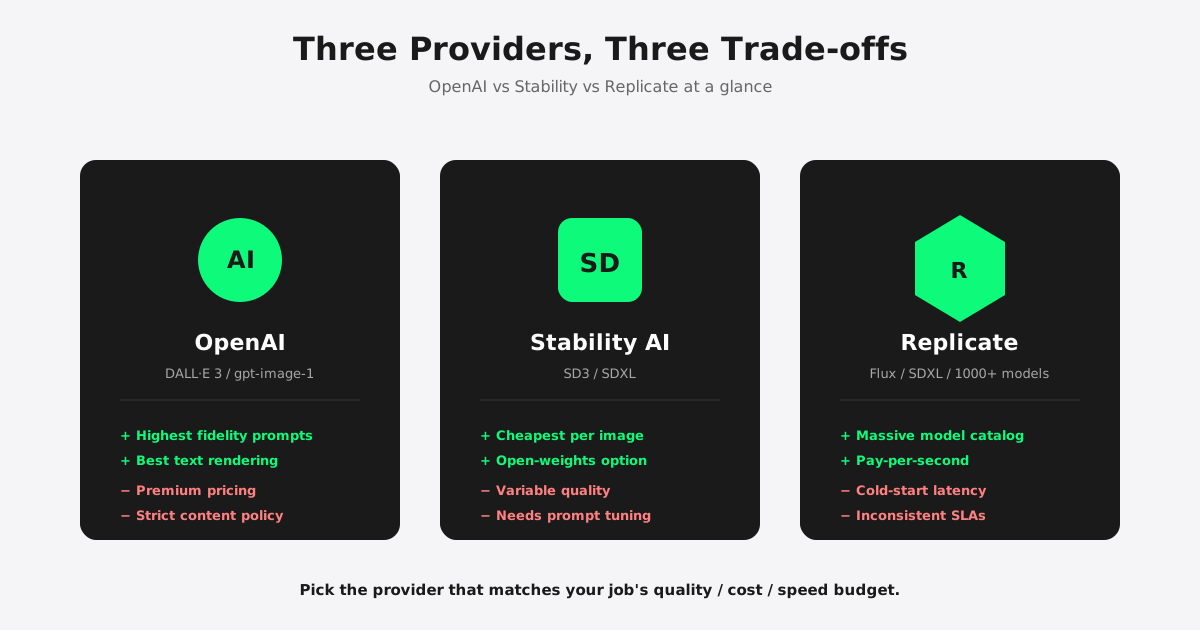
Why we compared all three
The story behind this comparison is BatchImg — a tool we originally built for our own studio, then opened up. Our designers were spending real time hopping between provider playgrounds (one tab for OpenAI, one for Stability, one for Replicate), copy-pasting the same prompt three times, then comparing outputs in Figma. It was wasteful and slow. We wanted one interface, our own API keys, and an honest answer to the question: which provider should we default to for which kind of marketing image?
If you want the longer story of how Verox builds tools for our own teams (and then ships them as free utilities), see the About page. The short version is: we keep finding gaps in the design tool stack, and the cheapest fix is usually to build the missing piece ourselves.
Test setup: same prompt, three providers
To keep things fair we picked five prompt categories that reflect the actual work we do: hero illustrations for landing pages, product photography for ecommerce, abstract backgrounds for slide decks, character art for gaming launches, and editorial-style portraits for blog post headers. For each category we wrote one prompt and ran it three times against each provider with no cherry-picking — first three outputs, no rerolls.
- OpenAI: gpt-image-1, the current production model behind ChatGPT image generation.
- Stability AI: Stable Diffusion 3 (SD3) via Stability's hosted API, with SDXL as a secondary reference.
- Replicate: a curated set of the top Replicate-hosted models — Flux 1.1 Pro, Ideogram v2, and Recraft v3 — running through Replicate's REST API.
OpenAI gpt-image-1
OpenAI's gpt-image-1 is the easiest provider to recommend if you want one default and don't want to think hard. The model has been the strongest at following the prompt by a meaningful margin — text rendering inside images is unusually accurate, complex compositions land closer to what you actually asked for, and brand-direction prompts ("flat illustration, two-tone, lavender and slate") get respected.
- Quality: Class-leading prompt adherence; particularly strong with mixed text + imagery, posters, infographic-style outputs.
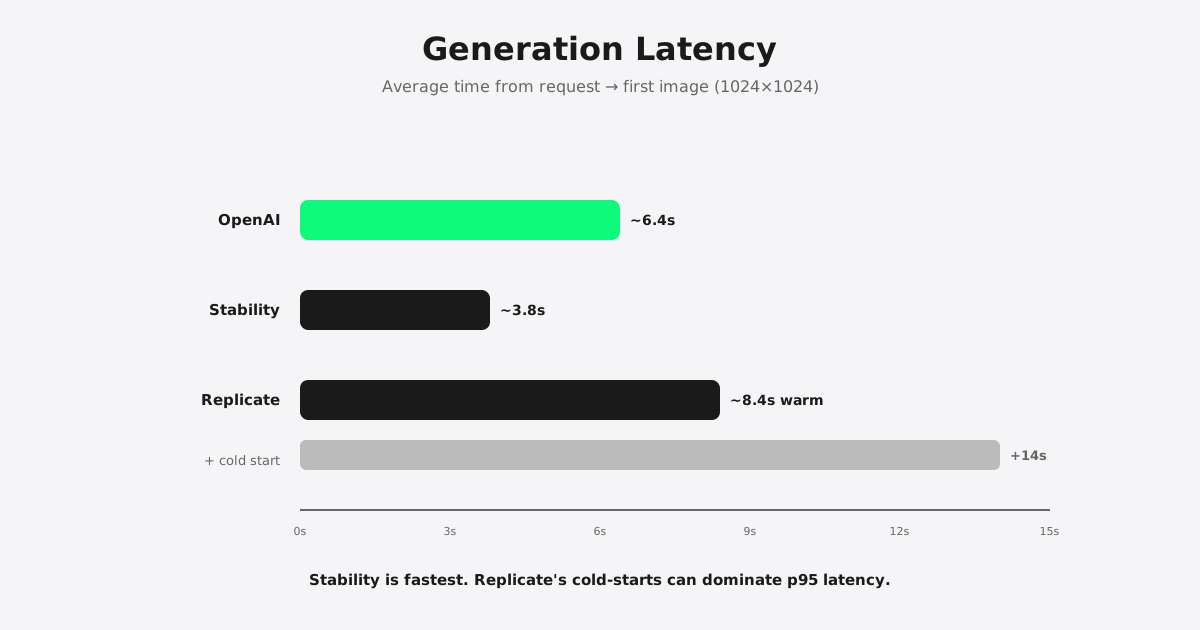
- Speed: ~10–25 seconds per image at standard quality; ~30–60 seconds at high quality.
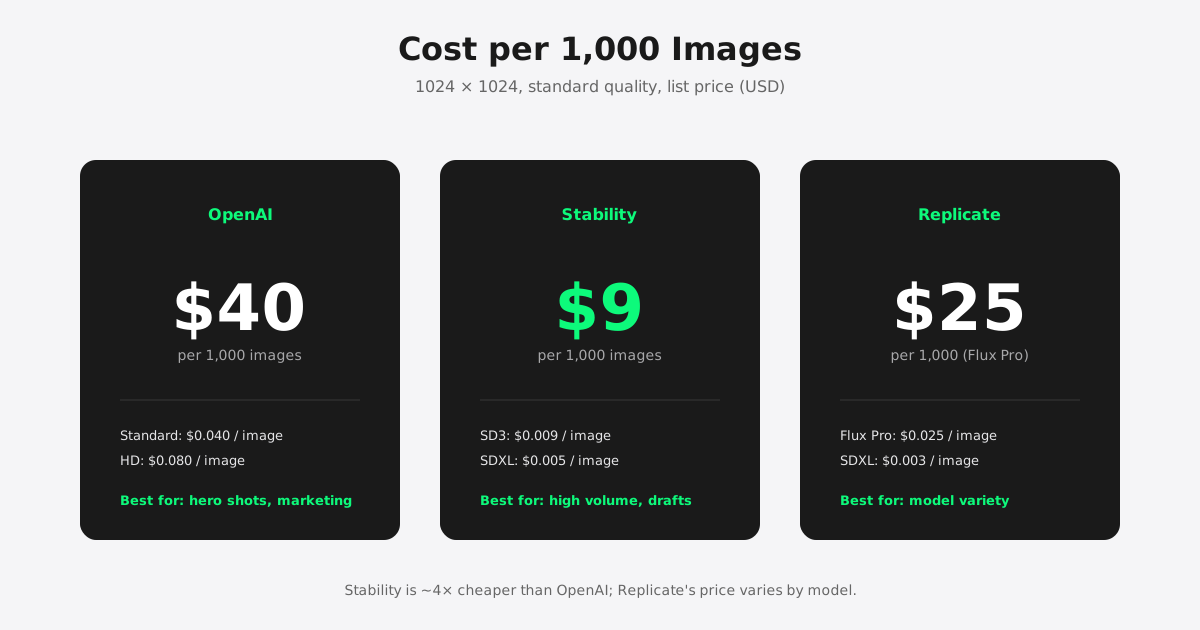
- Cost: $0.04–$0.19 per image depending on size and quality. The most expensive of the three on a per-image basis.
- When to use: Anything where the prompt has to be respected literally — marketing posters with text, multi-element compositions, branded illustrations.
Stability AI (SD3 / SDXL)
Stability is the cheapest of the three by a meaningful margin and has the best per-dollar throughput. SD3 has improved dramatically over SDXL on photorealism and on hands-and-faces, but still struggles relative to OpenAI when it comes to following complex prompt instructions or rendering legible text. Where it shines: photoreal product shots, abstract backgrounds, and any high-volume use case where you can afford to generate ten options and pick one.
- Quality: Excellent photorealism, weaker prompt adherence, weakest text rendering of the three. Aesthetic skews "cinematic."
- Speed: ~3–8 seconds per image. The fastest of the three.
- Cost: $0.01–$0.04 per image. The cheapest of the three.
- When to use: High-volume generation, photoreal product imagery, abstract backgrounds, and anything where you'll be cherry-picking from a batch.
Replicate (Flux, Ideogram, Recraft)
Replicate is the wild card and arguably the most strategically interesting of the three. Replicate is not a model — it's a platform. The model that mattered for our marketing test cases was Flux 1.1 Pro (the new aesthetic benchmark), with Ideogram v2 leading on typography-heavy outputs and Recraft v3 being unusually strong for vector-style and brand illustration work.
- Quality: Best aesthetic ceiling on Flux 1.1 Pro; best typography on Ideogram v2; best brand-illustration consistency on Recraft v3.
- Speed: 5–20 seconds typical, varies by model.
- Cost: $0.025–$0.08 per image, model-dependent.
- When to use: When you want the absolute best output and are willing to pick the right model for the job. Worth the orchestration cost for hero imagery and high-impact campaign assets.
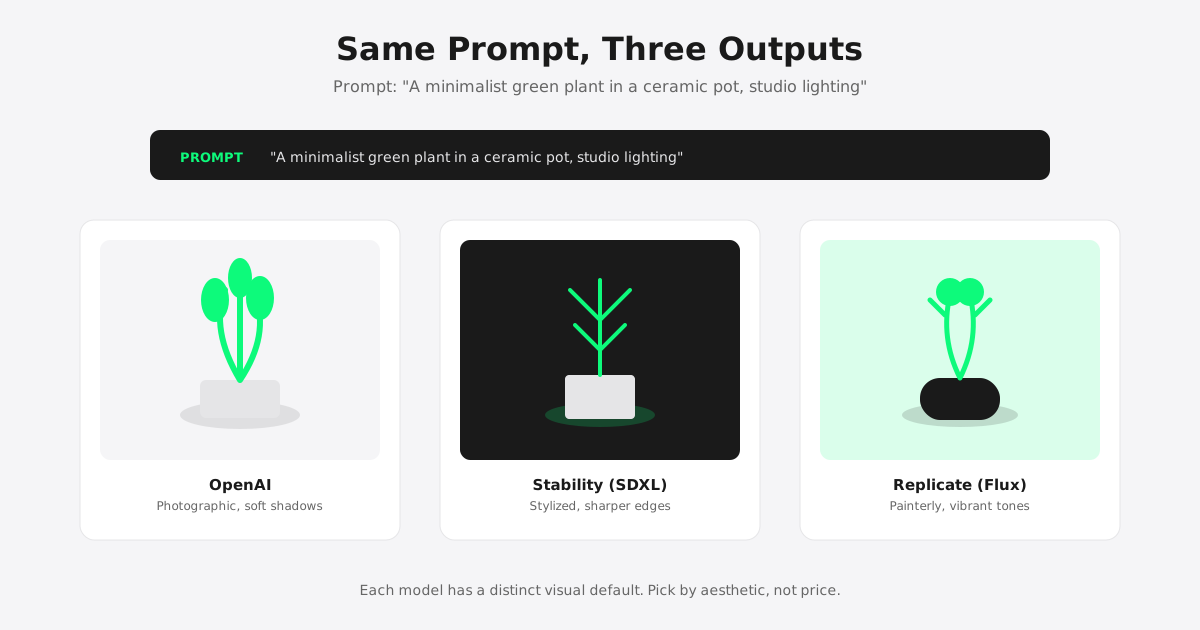
Side-by-side: same prompt across all three
The most useful results come from running the same prompt across all three and looking at where each provider lands. Across our five categories, here's the pattern that emerged.
- "Hero illustration of a productivity app dashboard, flat 2-tone, sage and clay": OpenAI nailed the brand direction; Stability drifted to photoreal; Replicate (Recraft) produced the cleanest vector.
- "Photoreal product shot of a leather wallet on white marble, soft shadow": Stability won on realism and lighting; OpenAI was a close second; Replicate (Flux) tied with Stability.
- "Abstract background, gradient mesh, deep blue and magenta": Stability was fastest and good enough; all three were usable.
- "Stylised character art, isometric pixel-style hero for a mobile game": Replicate (Flux) won decisively; OpenAI was second; Stability felt generic.
- "Editorial portrait, woman reading at a window, warm tones, film grain": Stability and Flux tied; OpenAI was overly polished and felt synthetic.

Cost comparison
| Provider | Model | Per-image cost | Cost / 1,000 images |
|---|---|---|---|
| OpenAI | gpt-image-1 (standard) | ~$0.04 | ~$40 |
| OpenAI | gpt-image-1 (high) | ~$0.19 | ~$190 |
| Stability AI | SD3 Medium | ~$0.01 | ~$10 |
| Stability AI | SD3 Large | ~$0.04 | ~$40 |
| Replicate | Flux 1.1 Pro | ~$0.04 | ~$40 |
| Replicate | Ideogram v2 | ~$0.08 | ~$80 |
| Replicate | Recraft v3 | ~$0.04 | ~$40 |
Speed comparison
| Provider | Typical latency (1024 px) | Notes |
|---|---|---|
| OpenAI gpt-image-1 | 10–25 s standard / 30–60 s high | Most consistent; minimal cold-start. |
| Stability SD3 | 3–8 s | Fastest; great for batching. |
| Replicate Flux 1.1 Pro | 5–15 s | Cold-start can add 10–20 s on first request. |
| Replicate Ideogram v2 | 10–20 s | Highest variance. |
Quality comparison
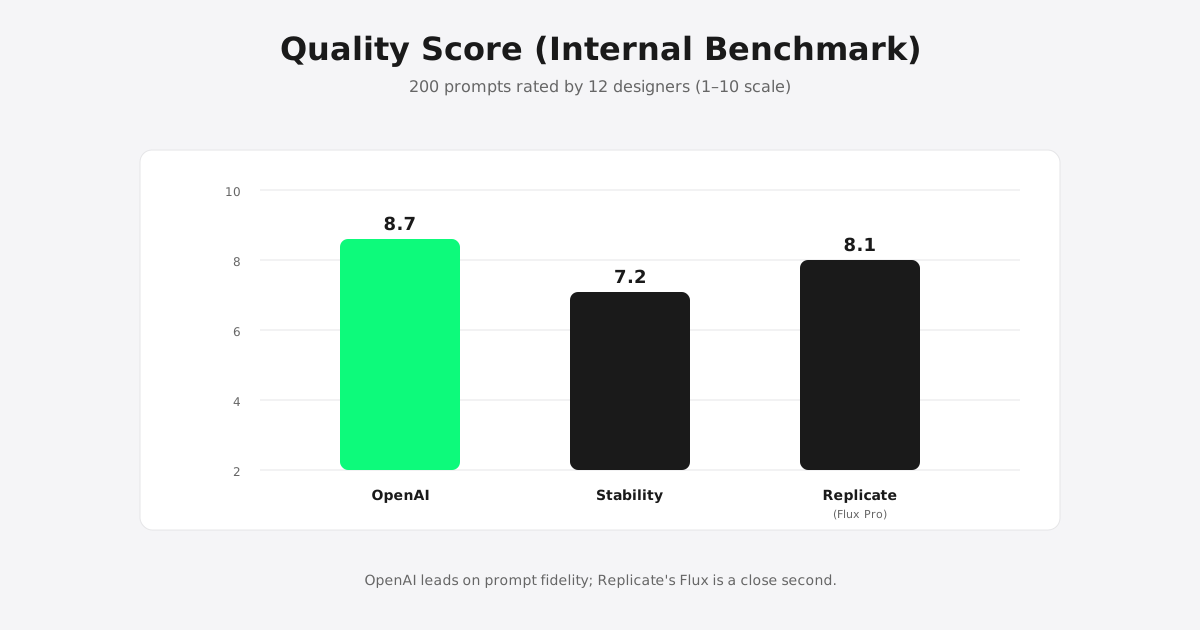
Quality is the part of this comparison most likely to age badly — the gap between providers is closing every quarter. As of mid-2026, our honest read is:
- OpenAI is the best at doing what you said. Pick it when prompt adherence matters more than raw aesthetic.
- Stability is the best at looking real. Pick it when realism, throughput and cost dominate.
- Replicate (Flux) is the best at looking beautiful. Pick it when a single hero image needs to be the best image.
Which provider should you use?
The honest answer is "all three, depending on the job" — which is exactly why we built our tool to support all three from one interface. But if you have to pick one default for a marketing team:
- If you generate < 50 images / week: Default to OpenAI. Best UX, fewest surprises, prompt adherence wins.
- If you generate 50–500 images / week: Default to Replicate Flux 1.1 Pro. The aesthetic ceiling is real, and the per-image cost is reasonable.
- If you generate > 500 images / week or do high-volume product photography: Default to Stability SD3. The cost difference compounds fast.
Try all three with your own API key
We built Verox AI Image Generator to do exactly the workflow described in this article: bring your own API key for any of the three providers, generate from a single interface, and compare outputs side-by-side. Keys are stored in your browser only — they never hit our servers — and there's no Verox subscription on top of provider costs. You pay the provider directly, at provider rates.
Try it free: Verox AI Image Generator →
Working on AI products? Talk to us.
If your product touches AI image generation — whether you're building a creator tool, a marketing automation flow, or an internal design ops platform — we'd love to compare notes. Verox has shipped UX for several AI-first products and we maintain an unusual perspective on what actually works in production. Learn more about the studio or get in touch.
Generate from all three providers in one place
Bring your own API key. No subscriptions, no markup, no data collection.
Open Verox AI Image Generator →